Cubic yards first, then tons
Landscape suppliers sell by the cubic yard, the ton, or both. The calculator starts with volume: length times width times depth, with the depth turned from inches into feet. Divide the cubic feet by 27 and you have cubic yards.
For tons, that volume is multiplied by a typical weight for the material you pick. Gravel and crushed stone are heavy, around 1.4 tons per cubic yard. Topsoil is lighter. Wet material weighs more, so treat the ton figure as a close estimate and ask your supplier which number they use.
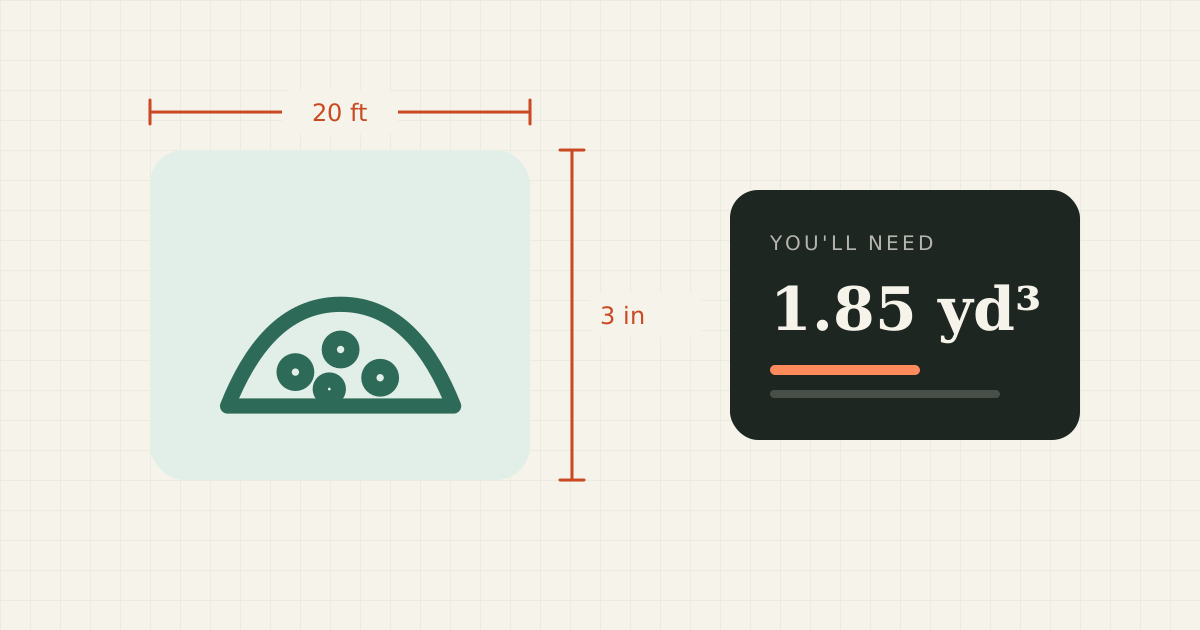
Worked example: a 20 × 10 ft garden path, 3 inches deep
- 20 × 10 × (3 ÷ 12) = 50 cubic feet
- 50 ÷ 27 = 1.85 cubic yards
- Pea gravel at about 1.4 tons per yard: 2.6 tons
- In 0.5 cubic foot bags: 100 bags
How deep should gravel be?
| Project | Typical depth |
|---|---|
| Garden path or walkway | 2 to 3 in |
| Patio or paver base | 4 to 6 in |
| Gravel driveway | 4 to 6 in, often in layers |
| Decorative top layer | 2 in |
Tips
- Crushed stone packs down when it's compacted. Order 10 to 15 percent more than the result shows if you'll run a plate compactor over it.
- Lay landscape fabric first on paths and beds to keep weeds and soil from working up.
- Put in edging, or the gravel will slowly spread into the lawn.
- Bags are handy for small jobs. For anything over a cubic yard, bulk delivery saves a lot of lifting.
Pouring concrete over your base? Use the concrete calculator next.
Frequently asked questions
How much does a cubic yard of gravel weigh?
About 1.4 tons, or roughly 2,800 pounds, for typical pea gravel or crushed stone. The exact weight depends on stone size and how wet it is.
How much area does a ton of gravel cover?
At 2 inches deep, one ton covers roughly 115 square feet. At 3 inches it covers about 75 to 80 square feet.
How many bags of gravel make a cubic yard?
Fifty-four bags of 0.5 cubic foot each, since a cubic yard is 27 cubic feet.
Should I compact gravel?
For driveways, patio bases and paver bases, yes. Compact it in layers of 2 to 3 inches. Decorative pea gravel on a path doesn't need it, because the round stones don't lock together anyway.
Results are estimates for planning. Product coverage, site conditions and installation methods vary, so check manufacturer guidance before you buy.